
The Best Mexican Egg Dishes
| Quick Summary A cultural guide to the most important Mexican egg dishes, covering their regional origins, traditional preparation, and what makes each one distinct.
Who This Is For
Key Takeaways
|
Mexican Egg Dishes: A Guide to the Most Beloved Breakfast Plates in Mexican Cuisine
Eggs act as the foundation for some of the most flavorful, sauce-forward Mexican morning plates in the world. A properly made Mexican egg dish arrives at the table already dressed: salsa ranchera pooling around the edges, warm corn tortillas stacked on the side, refried beans spooned nearby. The egg itself is almost secondary to the conversation happening around it.
Let’s explore the most important Mexican egg dishes you should know, from the iconic to the regional, and from the everyday scrambled plate to the layered Yucatecan specialty.
Why Eggs Are Central to Mexican Breakfast
Eggs have been a daily staple in Mexican cuisine for generations. Affordable, versatile, and available almost anywhere, fresh eggs found their way into the morning meal naturally by necessity. They pair with whatever else is on hand: refried beans, corn tortillas, leftover salsa, chili peppers from the garden, or a bit of white onion and cheese.
Many of the classic Mexican egg dishes we recognize today started as rural farm meals. Workers eating before a full day of physical labor needed something hot, filling, and fast to prepare. Eggs with beans and tortillas fit that need perfectly. Over time, those simple plates picked up regional character and became the breakfast dishes that define Mexican morning food culture.
The result is a set of egg dishes that taste deeply rooted. They’re not complicated for the sake of it. They’re built on real flavor logic: fat, acid, heat, and freshness, layered on top of a good egg.
Huevos Rancheros
If there’s one dish that defines Mexican egg culture for the rest of the world, it’s huevos rancheros. The concept is simple: fried eggs served on warm corn tortillas, topped with salsa ranchera, a cooked tomato-chili sauce made with tomatoes, chili peppers, white onion, and garlic. From there, just add refried beans on the side, and queso fresco crumbled on top.
The name “Huevos Rancheros” means “ranch-style eggs,” which tells you everything about the origins. This was a mid-morning breakfast dish eaten by Mexican farmworkers after the first stretch of morning chores, providing a proper, sustaining meal. The salsa was made from what was available. The eggs were fried in whatever fat was at hand. The warm tortillas were already on the comal.
Traditionally, the fried eggs are served with runny yolks intact, so they break into the tomato chili sauce and create something richer than either element alone. Common garnishes include sour cream, pico de gallo, and melted cheese. Some versions use a red salsa, others a green one. The core structure of tortilla, egg, and sauce stays consistent across regions.
At Red Iguana, Huevos Rancheros means three fresh eggs cooked to order, topped with house-made salsa ranchera, finished with melted Jack cheese, and served alongside refried beans, rice, and warm tortillas. It’s a clean, satisfying version of one of Mexican food’s most enduring breakfast plates and a great entry point if you’re new to the egg dish menu.
Huevos a la Mexicana
Huevos a la Mexicana are Mexican scrambled eggs made with a three-ingredient base that mirrors the colors of the Mexican flag: red tomato, white onion, and green serrano chile, and it’s called la Mexicana for exactly that reason. The three vegetables are sautéed first, then beaten eggs are folded in over medium heat until just set.
This is the most common home-cooked egg dish in Mexico. It’s fast, uses ingredients that are almost always available, and produces a plate with real flavor for very little effort. The serrano chile gives it heat while the tomato adds acid and body. Then the white onion brings sweetness as it cooks down. Together, they give the scrambled eggs a character that plain eggs scrambled in butter simply don’t have.
Huevos a la Mexicana are typically served with warm corn tortillas and refried beans. Some cooks add pork chorizo for extra flavor, or black beans on the side. The texture of the eggs depends on the cook. Some prefer them soft and custardy, others cook them a bit more.
Red Iguana’s Huevos Con Chorizo takes this tradition in a richer direction. We scramble house-made pork chorizo with fresh eggs and serve it with rice, refried beans, and a choice of flour or house-made corn tortillas. You can add diced tomato or potato to build it out further. It’s the Mexican scrambled tradition done with the kind of house-made chorizo that most people never get to try outside of a serious Mexican restaurant.
Huevos Motuleños
Huevos motuleños come from the town of Motul in the Yucatán Peninsula, and they show how different regional Mexican egg dishes can be from one another. Where huevos rancheros is a stripped-down ranch plate, huevos motuleños is a layered construction with a crisp tostada base, refried beans, a fried egg, tomato-based salsa, sweet fried plantains, and sometimes peas or ham.
The combination reflects Yucatán’s culinary history. Mayan ingredients meet Caribbean influences, sweet and savory sitting side by side on the same plate. The plantains aren’t an afterthought either; they’re structural to the dish, providing sweetness that offsets the acid of the salsa and the richness of the egg. Each component is prepared separately and assembled to order, which is why the textures stay distinct.
It’s a more involved breakfast dish than most, but oh-so worth it. The layering creates something you want to eat slowly.
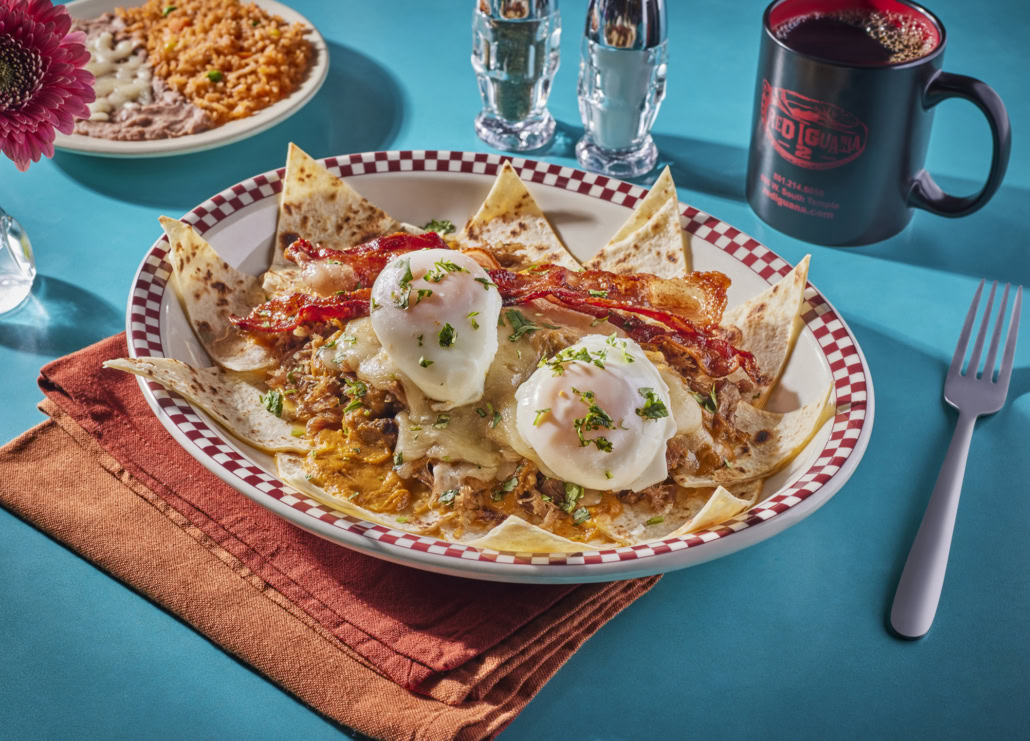
Red Iguana’s version of Huevos Motuleños is one of our restaurant’s most popular plates, and it’s easy to see why. We smother succulent pork carnitas with our spicy mole amarillo, sprinkle on melted Jack cheese, then crown it all with two poached eggs and two strips of crispy bacon. A ring of flour tortilla chips adds crunch to every bite. Spanish rice and refried beans round out the plate. It’s a brunch dish that brings customers back for more.
Chilaquiles
Chilaquiles are one of the most beloved Mexican breakfast dishes, and eggs play a key but supporting role here. The base is tortilla chips (either day-old tortillas cut and fried, or house-made totopos) simmered in red salsa or green salsa until they soften slightly and absorb the sauce. The egg goes on top: fried with the yolk still soft, or scrambled and folded in, depending on the cook.
The combination works because of contrast. The chips start crisp and slowly give way to the salsa. The egg adds richness that tempers the acid. Queso fresco or cotija cheese, sour cream, and sometimes a few slices of avocado finish the plate. With hot sauce on the side, it’s a dish that uses everything and ends as a deeply satisfying Mexican breakfast.
Regional variation comes mostly in the salsa. Red salsa gives the dish a deeper, earthier flavor. Green salsa keeps it brighter and sharper. The cheese and garnishes shift by region, too, with queso fresco in some areas, and crema and cotija in others.
Our Chilaquiles go well past the standard version. We toss house-made totopos with pork chorizo and egg, then finish it off with Salsa Española and mole poblano; two sauces that bring genuine complexity to the plate. Finally, we garnish with queso cotija, queso fresco, crema Mexicana, green onions, and diced avocado, and serve with refried beans. This is a chilaquiles that reflects the full range of Red Iguana’s kitchen.
Other Notable Mexican Egg Dishes Worth Knowing
Mexican egg cooking goes well beyond the most familiar plates.
Huevos Divorciados
Huevos Divorciados are two fried eggs served on separate corn tortillas, one covered in red salsa, the other in green. The “divorced” eggs reflect two distinct salsa traditions that exist side by side in Mexican cooking. It’s a visually striking breakfast dish that tastes exactly as interesting as it looks.
Machaca Con Huevo
Machaca Con Huevo is a northern Mexican tradition of slow-cooked shredded beef that’s been dried and then rehydrated, grilled with onions, bell peppers, and tomatoes, and then scrambled with eggs. It comes from Sonora and Chihuahua and carries the flavors of the northern borderlands: hearty, savory, built for a full morning.
Red Iguana’s Monterrey Plate (Machaca Con Huevo) brings this tradition south, with slow-cooked shredded beef scrambled with fresh eggs and served with double refried pinto beans sprinkled with queso cotija and queso fresco, one of our more deeply satisfying egg plates on the menu.
Papadzules
Papadzules are a Yucatecan egg dish with ancient Mayan roots. Boiled eggs are wrapped in corn tortillas, bathed in a pipian sauce made with pumpkin seeds, and topped with tomato salsa. The flavor is earthy, dense, and unlike anything else in Mexican cooking.
At Red Iguana, our Papadzules consist of two corn tortillas filled with sliced boiled egg and pipian, topped with mole verde and Salsa Española, finished with melted Jack cheese and pickled red onions. If you’re feeling adventurous, go for the Papadzules
Huevos Ahogados
Huevos Ahogados or “drowned eggs” are eggs poached directly in a simmering tomato-chile broth. The whites set slowly in the sauce while the yolks stay soft. It’s a preparation built entirely around the sauce doing the work, which is why the quality of the tomato and chili base matters so much.
What Makes These Dishes Work
Across all of these Mexican egg dishes, a few consistent principles show up. For one, fresh eggs make a real difference. The flavor is cleaner, the whites hold their shape better, and the yolks have more color and richness. A well-built salsa is also non-negotiable; whether it’s a simple tomato chili sauce or something more complex, the sauce is almost always the center of gravity in Mexican egg cooking.
Fat choices vary by region and by cook. Olive oil, lard, and a little butter each show up depending on what’s traditional in that part of Mexico. A cast iron pan is a classic choice. It holds heat evenly, which matters when you’re cooking eggs at medium-high heat and need the surface to stay consistent.
Salt timing is also part of the tradition. Many cooks season with salt in the pan or sauce rather than on the egg directly, which keeps the texture of scrambled eggs smoother. And across nearly every dish, it’s standard to serve immediately. Eggs don’t keep well, and the texture changes fast once they’re off the heat.
These aren’t techniques invented for restaurant kitchens. They’re the accumulated habits of generations of cooks who made these plates every morning and knew exactly how they were supposed to taste.
Come Try the Real Thing at Red Iguana
Egg dishes are one of the most honest expressions of a food culture that’s been refining these plates for centuries. They’re delicious, filling, and made from ingredients that work together in ways that took generations to figure out.
But the best way to understand authentic Mexican cuisine isn’t to read about it. It’s to sit down in front of a plate made with care, featuring house-made salsa, fresh eggs, and real tortillas, all included. At Red Iguana, we’ve been doing exactly that since 1965. That same commitment to authentic Mexican recipes runs through every egg dish on the menu today.
Whether you’re drawn to the familiar comfort of Huevos Rancheros, the bold layering of Huevos Motuleños, or the ancient Yucatecan character of Papadzules, Red Iguana is where you come to taste the real thing. Dine in, take out, or let us cater your next event. Make a reservation online or just come in to see why we’ve been Utah’s favorite Mexican restaurant for more than 25 consecutive years!


