
Mexican Breakfast Dishes You Should Know and Try
Summary
Key Takeaways:
Who It’s For:
|
Mexican Breakfast Dishes You Should Know and Try
Mexican breakfast gets treated like a weekend novelty in a lot of American kitchens. A plate of huevos rancheros on a lazy Sunday, maybe chilaquiles if someone’s feeling ambitious. The reality is that breakfast in Mexico is taken seriously, more seriously than in most countries. It’s a full meal, built around eggs, beans, tortillas, and salsas, and the dishes vary dramatically by region.
At Red Iguana, we’ve been making regional Mexican food since 1965. Our breakfast menu draws from the same Cardenas family recipes that built the restaurant. These aren’t adaptations for American tastes. They’re the real thing, made from scratch the same way they’ve always been made.
Here’s a guide to the dishes that define a real Mexican breakfast, what they are, where they come from, and how we make them.
Huevos Rancheros
Huevos rancheros (pronounced WAY-vohs ran-CHAY-rohs) is the dish most people picture when they think of a Mexican breakfast. Fried eggs served over warm corn tortillas, covered in salsa. Simple in concept. The quality lives in the details.
The name translates to “rancher’s eggs,” and the dish has its roots in rural Mexico as a mid-morning meal eaten after hours of morning work. It spread across the country and became one of the most recognizable Mexican breakfast foods in the world.
The salsa is the whole point. A red salsa built from Roma tomatoes, garlic, onions, and dried chiles tastes completely different from a green salsa made with tomatillos and serrano peppers. Most serious versions of this dish are served with refried beans on the side. The beans and egg yolk mix together on the plate in a way that makes the whole thing richer. Fresh cilantro and crumbled cotija cheese on top. That’s the combination.
Our Chilaquiles Red Iguana Style takes the same spirit in a different direction. House-made totopos tossed with house-made pork chorizo and egg, finished with salsa espanola and mole poblano, garnished with queso cotija, queso fresco, crema mexicana, green onions, and diced avocado. Served with refried beans. It’s a heartier breakfast dish than a straight huevos rancheros plate, and the mole poblano layer is something you won’t find anywhere else in Salt Lake City.
Chilaquiles
Chilaquiles (pronounced chee-lah-KEE-lehs) come from a Nahuatl word meaning roughly “chiles and greens.” The dish is pre-Hispanic in origin. At its core, it’s tortilla chips called totopos, simmered in salsa until they’ve soaked up the sauce but haven’t gone completely soft. The texture should have some resistance. That’s the difference between chilaquiles done right and chilaquiles that are just soggy chips.
Red chilaquiles use red salsa or a chile colorado base. Green chilaquiles use salsa verde from tomatillos. Both are correct. The garnishes, cotija cheese, crema, fresh cilantro, and diced onion, add brightness and richness on top.
This is also the dish people make with leftovers. Day-old tortillas cut up and fried crispy, tossed in whatever salsa is in the house. That practicality is part of what made it a staple across Mexico. A good way to use what you have, and the flavor doesn’t suffer for it.
Papas con chorizo
Papas con chorizo is potatoes and chorizo cooked together in a pan. It sounds humble because it is humble. It’s also one of the most satisfying things you can eat in the morning.
Mexican chorizo is not Spanish chorizo. Spanish chorizo is a cured, sliced sausage. Mexican chorizo is raw ground pork heavily seasoned with dried chiles, usually guajillo and ancho, along with garlic, vinegar, and spices. It crumbles when it cooks and releases a deep red fat that coats everything in the pan. When the potatoes go in and cook in that fat, they pick up the chorizo’s color and spice.
The egg mixture often gets added directly to the pan. Scrambled eggs folded into the potatoes and chorizo produce a single dish where everything is combined, no separate components, no assembly required. Serve it with warm flour tortillas or corn tortillas and a spoonful of pico de gallo.
At Red Iguana, we make our chorizo in-house. The recipe hasn’t changed. That matters because the flavor of house-made pork chorizo is substantially different from pre-packaged commercial versions, which tend to be fattier and less spiced. Our Huevos Con Chorizo, house-made pork chorizo scrambled with eggs, served with rice, refried beans, and your choice of flour or house-made corn tortillas, is as good a version of this dish as you’ll find.
Breakfast Tacos
Breakfast tacos are a northern Mexico staple, especially in Chihuahua and the border states. The format is simple. A warm tortilla, a filling built around eggs or meat or both, and whatever garnishes you have on hand.
Flour tortillas are traditional in northern Mexico for breakfast tacos. The wheat-farming regions of the north developed a strong flour tortilla culture that’s distinct from the corn tortilla tradition in southern and central Mexico. Both work. The tortilla should be warm. A cold tortilla wrapped around warm scrambled eggs is a different and lesser experience.
Common fillings include scrambled eggs with tomatoes, onions, and serrano peppers; eggs with chorizo; eggs with ham; or papas con chorizo. Avocado slices on top. A spoonful of green salsa or red salsa. Keep it simple. Breakfast tacos don’t need to be complicated to be good.
Migas
Migas (MEE-gahs) means crumbs. The name refers to the torn or cut tortilla pieces that get fried until crispy and then scrambled with eggs. It’s a dish built around the idea of using what’s left over, stale tortillas, the end of the salsa, whatever onions and peppers are in the house.
The technique is what matters. The tortilla pieces should go into the pan in hot oil and cook until they’re crispy before the egg mixture goes in. If the tortillas are soft when you add the eggs, they’ll stay soft, and the dish loses its defining texture. The contrast between the crispy tortilla pieces and the soft scrambled eggs is the whole point.
Top with fresh cilantro, pico de gallo, crumbled cotija cheese, and a spoonful of salsa. Some versions add chorizo to the pan before the tortillas. That version is hard to argue with.
Black Beans and Refried Beans
Every serious Mexican breakfast has beans. This isn’t optional. Beans are the foundation. They provide protein, they balance the heat of the salsa, and they give the meal staying power through the morning.
Refried beans (frijoles refritos) are pinto beans that have been cooked, mashed, and then fried in lard or oil. The name is a translation issue. “Refried” suggests they’ve been fried twice, but the “re” in Spanish indicates intensity. They’re deeply fried. Good refried beans are smooth and rich, and they should taste like beans.
Black beans are common in southern Mexico and the Yucatan, served whole in their cooking liquid with a little onion and epazote, a herb with a pungent, medicinal flavor that blooms when cooked with beans. Both styles show up on the Red Iguana menu. Our Monterrey Plate, slow-cooked shredded beef grilled with diced bell peppers and onions, scrambled with eggs, comes with double refried pinto beans sprinkled with a blend of queso cotija and queso fresco. That combination adds salt and creaminess at the same time.
What Makes a Mexican Breakfast Different
The key difference between a Mexican breakfast and the standard American diner plate isn’t the individual ingredients. It’s the way those ingredients work together. Eggs are a vehicle for salsa, beans, and chile heat. Tortillas replace bread in every form.
The regional variation is real. What they eat in Chihuahua, dried beef scrambled with eggs and flour tortillas, is different from Mexico City’s chilaquiles and café de olla, or the Yucatán’s huevos motuleños with black beans and fried plantains. The dishes we serve at Red Iguana carry those regional distinctions with them.
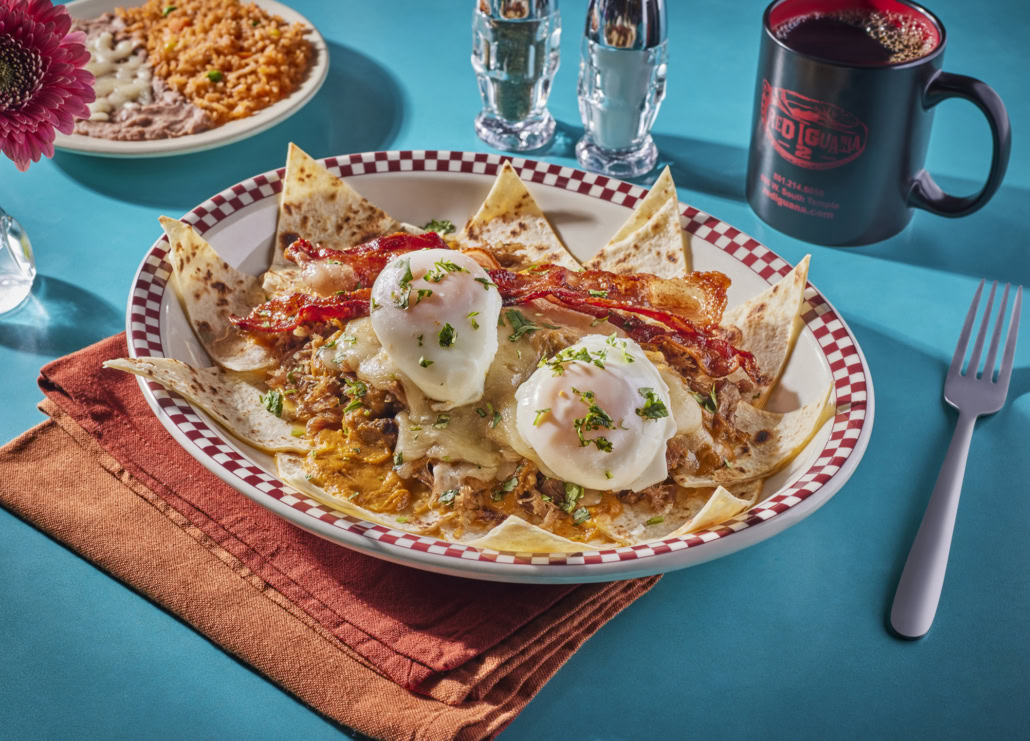
Our Huevos Motuleños are a good example. Carnitas in spicy mole amarillo and melted Jack cheese, topped with two poached eggs and crispy bacon, garnished with flour tortilla chips, served with Spanish rice and refried beans. The mole amarillo, habanero-driven and fiery, is what sets it apart from anything else on a Salt Lake City breakfast table.
When the chorizo is made from scratch, the salsas are built from fresh tomatoes and dried chiles, and the beans are cooked low and slow, breakfast stops being a routine. It becomes the reason to show up.
Red Iguana has two full-service locations on North Temple and South Temple in Salt Lake City, and a Taste of Red Iguana at City Creek Center for faster weekday visits. Current hours and reservations are at rediguana.com.


