
Chimichanga vs. Burrito: What’s the Difference?
| Quick Summary:
A straightforward comparison of burritos and chimichangas, what they are, how they’re made, and what sets them apart, with a section on how enchiladas fit into the picture. Who This Is For
Key Takeaways
|
Chimichanga vs. Burrito: What’s the Difference?
Many people have ordered a burrito and a chimichanga at some point, but what exactly separates them? Both delicious Mexican food, both stuffed with a classic combo of rice, beans, and your favorite meat filling, the answer to what separates them is simpler than you’d think, but the details are worth knowing before you sit down and order.
Here’s a breakdown of both dishes: where they come from, what’s in them, how they’re cooked, and how they compare to enchiladas while we’re at it.
What Is a Burrito?
A burrito is a large flour tortilla wrapped tightly around a filling of meat, rice, beans, and cheese with salsa and guacamole usually mixed right in. The whole thing gets folded into a tight package, often wrapped in foil, and eaten by hand.
The name translates to “little donkey” in English. Its roots are in northern Mexico, where flour tortillas were common and portable, filling meals that made sense for workers on the move.
In a burrito, the tortilla stays soft. Nothing gets cooked after it’s wrapped. That’s the key point that sets it apart from its crispier cousin.
What Is a Chimichanga?
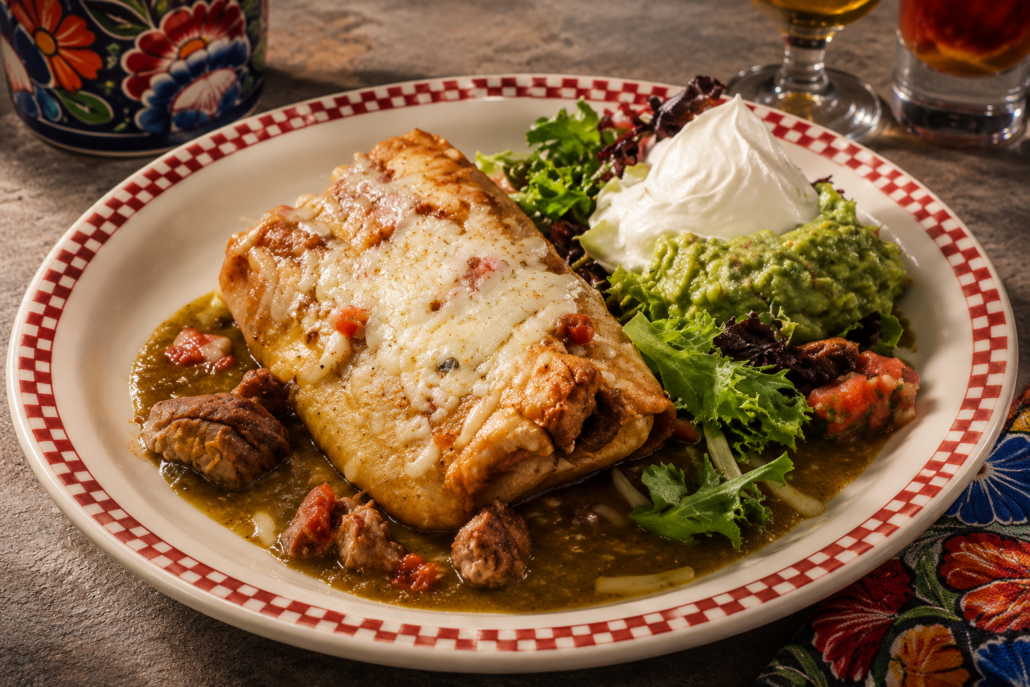
A chimichanga is a deep-fried burrito. Really!
The origin story is a good one. Around 1922, a Tucson restaurateur named Monica Flin accidentally knocked a burrito into a deep fryer. The result caught on…
At Red Iguana, our chimichanga starts with a 10-inch flour tortilla rolled with refried beans and your choice of filling, deep-fried until crispy, then smothered in our Salsa Española (thinly sliced onions, garlic, bay leaf, oregano, cinnamon, and crushed tomatoes). The dish is complete with melted Jack cheese and served hot with guacamole and sour cream to top it off.
Chimichangas are especially popular in Arizona and in the northern Mexican states of Sonora, Chihuahua, and Sinaloa, where they’re sometimes called chivichangas. They’re considered part of the Tex-Mex tradition of dishes that grew out of the US-Mexico border region rather than from Mexico’s interior.
The Key Differences
| Burrito | Chimichanga | |
| Tortilla | Soft flour | Crispy fried flour |
| Cooking method | Wrapped, not fried | Deep-fried |
| Toppings | Mixed inside | On top after frying |
| How you eat it | By hand | Fork and knife |
| Origin | Northern Mexico | Tex-Mex / Arizona |
The fillings are more similar than different. Both dishes use flour tortillas and the same core proteins, like shredded beef, chicken, carne asada, or shredded pork. Burritos tend to pack in more rice, beans, and vegetables. Chimichangas lean heavily on meat and cheese, with the toppings doing the work that the inside fillings do in a burrito.
At the end of the day, the real difference is texture and how you eat it. A burrito is a handheld meal. A chimichanga is a plated dish with a crispy shell, sauce on top, and a fork required.
Burrito vs. Enchilada: What’s the Difference?
We’ve explored burritos vs chimichangas, but what about enchiladas? Another common Mexican food mix-up, but burritos and enchiladas are truly different dishes.
The biggest tell is the tortilla. Burritos use large flour tortillas. Enchiladas use corn tortillas that are smaller and rolled rather than folded into a burrito wrap. Enchiladas are also always covered in green or red sauce. Burritos are built to be portable, while enchiladas are a plated dish from the start.
You’ll want to get lost in the Enchiladas section of Red Iguana’s menu. Our traditional enchiladas are topped with house-made dried red chile powder sauce and finished with melted Jack cheese. The Enchiladas Suizas, two corn tortillas filled with sour cream chicken and avocado, are topped with Mole Poblano. These aren’t generic enchiladas. Each one connects back to a specific regional tradition from the Cardenas family’s recipes.
How They Fit with Other Mexican Dishes
For additional context, here’s how burritos and chimichangas sit alongside a few other dishes you’ll see on any Mexican menu:
- Taquito/Flauta: Rolled tight and deep-fried like a chimichanga, but made with a smaller corn tortilla. More of a snack than a full meal.
- Taco: Corn or flour tortilla, folded in half around a filling. Not wrapped, not fried.
- Quesadilla: Flour tortilla grilled flat with melted cheese inside. No rolling, no frying.
Come Try Burritos and Chimichangas at Red Iguana
Now that you know the difference, you’ll just have to order them side by side.
We’ve been serving authentic Mexican cuisine in Salt Lake City since 1965, all made with house-made ingredients and recipes the Cardenas family has been cooking for generations. If you haven’t tried the Chile Verde Chimichanga, that’s a good place to start. And if you want to go deeper into the menu, our combination plates let you sample a few things at once.
Red Iguana has two full-service local Mexican restaurants on North Temple and South Temple in Salt Lake City, open Sunday through Thursday 11am–9pm and Friday and Saturday 11am–10pm. Reservations are available at both locations through Toast. Come hungry.


