
What are Sopapillas?
| Quick Summary:
Who This Is For Anyone curious about what sopapillas actually are: first-timers at a Mexican restaurant, home cooks who want to make them, or anyone who’s eaten them a dozen times and never thought to ask where they came from. Key Takeaways
|
What Are Sopapillas? The Puffy Fried Pastry Worth Every Bite
Most people have eaten sopapillas without knowing exactly what they are. You order them at a Mexican restaurant, they arrive warm and golden, you pour honey over them, and that’s the end of the analysis. Fair enough!
But sopapillas have a real story about where they come from, why they puff the way they do, and why New Mexico and Texas serve completely different versions of the same basic idea.
What Are Sopapillas?
A sopapilla is a piece of dough made from all-purpose flour, baking powder, salt, fat, and warm water that gets dropped into hot oil and puffs up into a hollow little pillow. That puff is the whole point. Steam builds inside the dough as it hits the hot oil, separating the layers and creating an air pocket in the center. The outside goes golden brown and slightly crisp. The inside stays soft.
The result is somewhere between a fried pastry and bread. It’s not a donut or a churro, but something with its own texture that doesn’t translate neatly into anything else.
Sweet or savory, sopapillas work both ways. The direction you go depends almost entirely on where you learned to eat them.
Where Sopapillas Come From
The clearest line of origin for Sopapillas runs through New Mexico. Spanish settlers brought fry bread traditions with them, and over centuries of contact between Spanish, Native American, and Mexican culinary cultures, the New Mexican sopapilla developed into what it is today: a puffy, deep-fried dough pastry that shows up at the table alongside the main course.
While often thought of as a dessert, in New Mexico, sopapillas are actually more of a bread. You can use them to scoop up green chile stew, stuff them with refried beans and meat, or generally eat them the way someone else might reach for a dinner roll. Sopapillas as a sweet treat came later, through Tex-Mex adoption.
The Mexican version is also a bit different. Mexican sopapillas are thinner and crispier, closer to a buñuelo than to the puffy New Mexican style. Across other Latin American countries, fried pastry traditions vary further still, each region putting its own spin on the basic idea of dough meeting hot oil.
Tex-Mex cuisine landed on the dessert version and ran with it. In San Antonio, El Paso, and across Texas, sopapillas came out after the meal: golden brown, dusted with cinnamon sugar or powdered sugar, served with honey. This is the version that most Americans know today.
How Sopapillas Are Made
Sopapillas are simple: all-purpose flour, baking powder, salt, and a fat. Butter or shortening both work, as does a neutral oil like canola oil or vegetable oil. From there, you add warm water, mix until the dough forms, and let it rest.
Once the dough has rested, it gets rolled out with a rolling pin to about a quarter inch thick. It’s then cut into squares or triangles. From here, drop them into hot oil (peanut oil holds heat well, canola oil is more common) and watch them puff up! The oil temperature has to be right. Too cool, and the dough just sits there absorbing oil without puffing. Too hot, and the outside burns before the inside cooks. Around 375°F is the target. A small piece of dough dropped in should sizzle immediately and float to the surface.
When they’re golden brown, it’s time to pull them out, drain on paper towels, and serve immediately. They deflate as they cool, so timing matters.
Every sopapilla recipe you’ll find handles the exact measurements a little differently, but though the details will vary, the basic structure stays consistent.
Sweet Sopapillas: The Classic
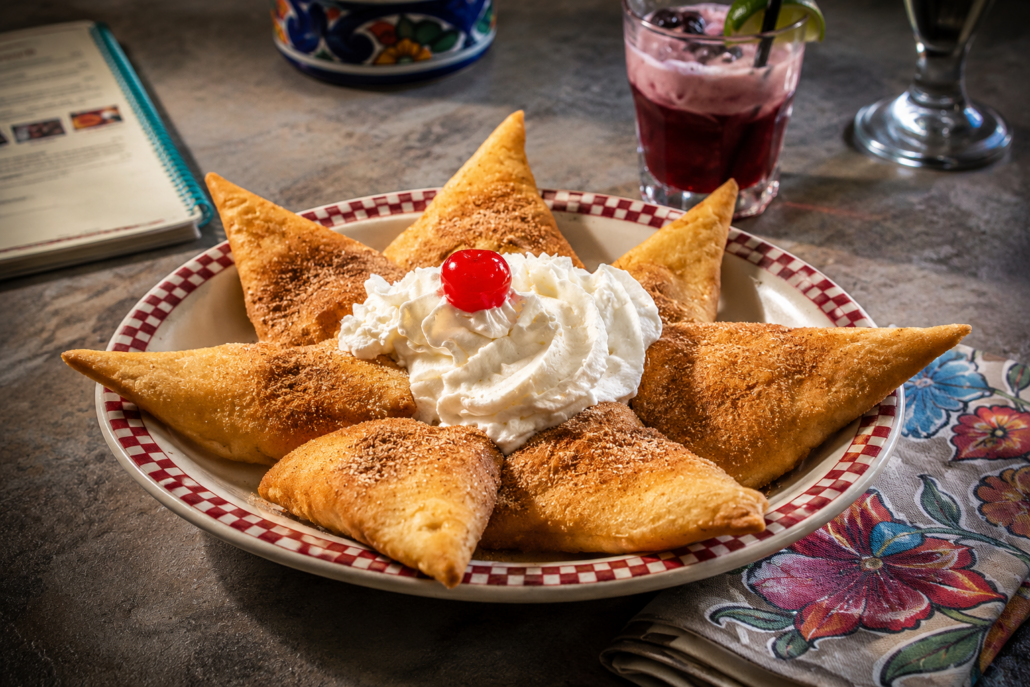
Sopapillas come in both sweet and savory varieties. The sweet version is simple and hard to improve on. Pull a sopapilla out of the hot oil, let it drain for a moment, then hit it with cinnamon sugar while it’s still warm so the sugar sticks. Then drizzle honey over the top, or pour it inside the hollow center so it soaks into the bread. Add whipped cream if you want. Some people go further: a scoop of ice cream tucked inside, a drizzle of caramel or chocolate sauce.
Hot fried dough plus honey is what really gives this dish its edge. The bread soaks it up, the cinnamon sugar adds crunch, and the whole thing disappears faster than you planned.
Powdered sugar also works as an alternative to cinnamon sugar. Some versions of the recipe add a little sugar directly into the dough for extra sweetness.
At Red Iguana, sweet is how we like it. Our house-made sopapillas are served as dessert, lightly fried, with locally produced Utah honey, cinnamon sugar, and whipped cream. After a plate of Mole Negro or Cochinita Pibil, they’re the right way to finish. Simple, warm, and made from scratch the same way everything else on our menu is.
Savory Sopapillas: The New Mexican Tradition
In New Mexico, the sopapilla is functional. You tear off a piece and use it to push food onto your fork, or stuff the whole thing. You can fill the hollow center with seasoned beef, pork carnitas, refried beans, green chile and cheese, and eat it as a handheld meal. Stuffed sopapillas are common on New Mexican menus for exactly this reason: the puff creates a natural pocket that you can fill with all sorts of delicious things.
Paired with a savory filling, the fried dough takes on a completely different character. The slight crispiness of the outside works against the richness of the filling the same way a good tortilla does. It acts as a delicious, crispy vehicle for your sopapilla filling.
Sopapillas vs. Other Fried Dough
A few things sopapillas get compared to that they’re not:
Fry bread is the closest relative. Native American fry bread uses a similar method: dough dropped into hot oil, but it’s a distinct tradition with its own cultural history. The overlap is in technique, not origin.
Buñuelos are the Mexican fried pastry that get confused with sopapillas most often. They’re thinner, crispier, often made with something closer to pie dough, and they don’t puff. A buñuelo is a flat, crispy disc. A sopapilla is a hollow pillow. Different dishes.
Churros are fried, but shaped through a press and coated in cinnamon sugar after frying. No puff, no hollow center. The texture is completely different.
The puffed pastry quality is what defines a sopapilla. If it doesn’t puff, it’s just deep-fried dough…which isn’t nothing, but it’s not a sopapilla.
Come Try Our Sopapillas at Red Iguana
Sopapillas are one of those things that are hard to fully appreciate until you’ve had a good one. They’re warm, just out of the oil, with honey soaking into the bread and cinnamon sugar on the outside.
We make our sopapillas the same way we make everything else at Red Iguana, from scratch. Our sopapillas are an incredible end to any meal.
Ready to try them for yourself? You can find us at 736 W North Temple or 866 W South Temple in Salt Lake City, open Sunday–Thursday 11am–9pm and Friday–Saturday 11am–10pm. The Taste of Red Iguana is also available at City Creek Center, 28 State St, for a weekday option. Make reservations today at rediguana.com.
FAQ
What’s the difference between New Mexican and Mexican sopapillas?
New Mexican sopapillas are thick, puffy, and served alongside savory dishes as a bread. Mexican sopapillas are thinner and crispier, more like a fried pastry. Same name, genuinely different food.
Are sopapillas the same as fry bread?
No. Fry bread comes from Native American culinary history. Sopapillas developed through Spanish and Mexican food traditions in the Southwest. While the preparation method overlaps, each dish has its own history.


